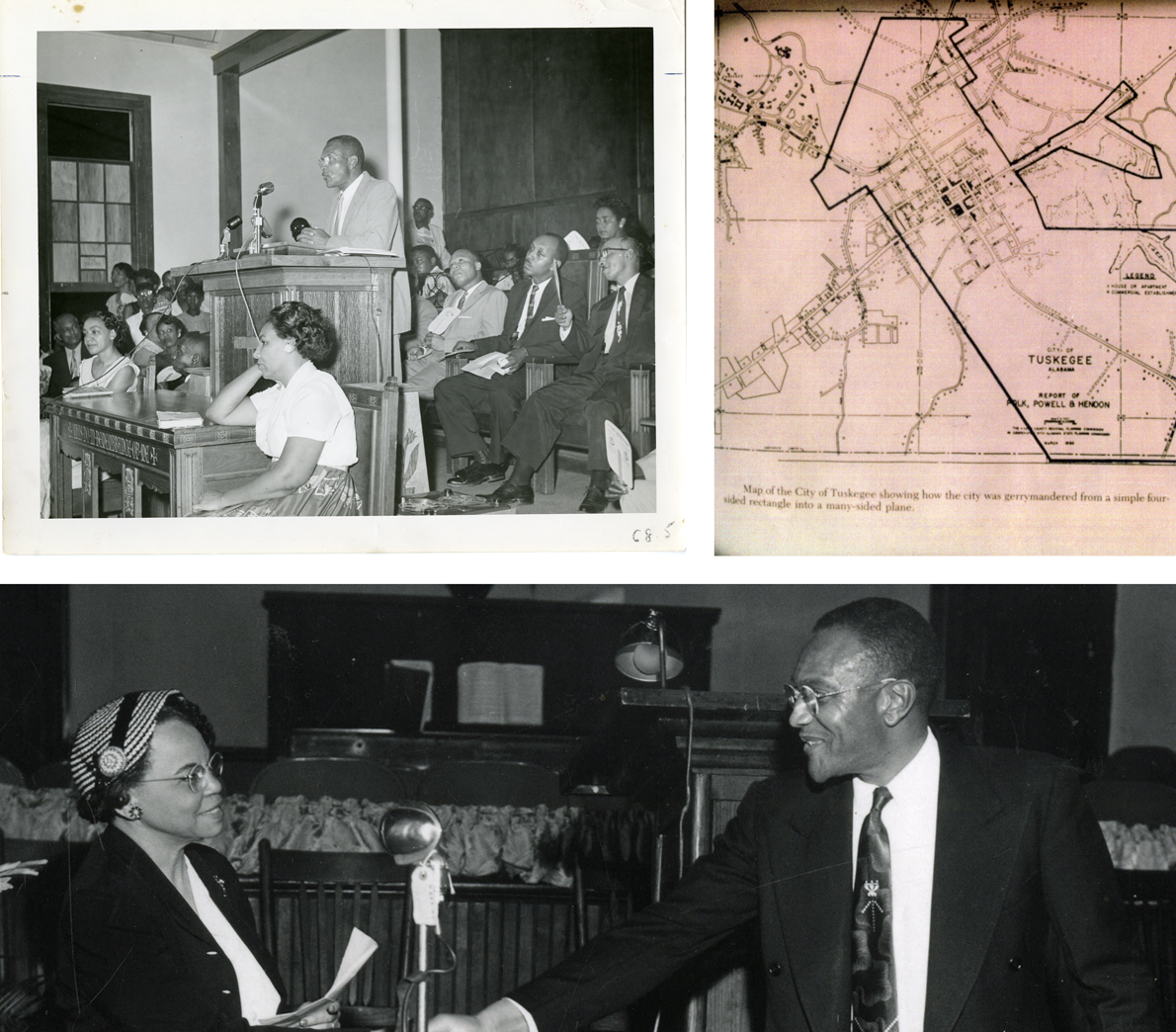
The Tuskegee Civic Association (TCA) was founded on April 13, 1941, at Greenwood Missionary Baptist Church, evolving from earlier groups such as the Tuskegee Men’s Club. Under the leadership of Charles G. Gomillion, the organization focused on improving conditions in Tuskegee and Macon County through civic education, voter registration, and legal action. Notably, the TCA played a pivotal role in the Gomillion v. Lightfoot case, which prevented gerrymandering and protected African American voting rights. The TCA’s records (1941–1970) include correspondence, legal documents, and materials related to civil rights efforts in Tuskegee.
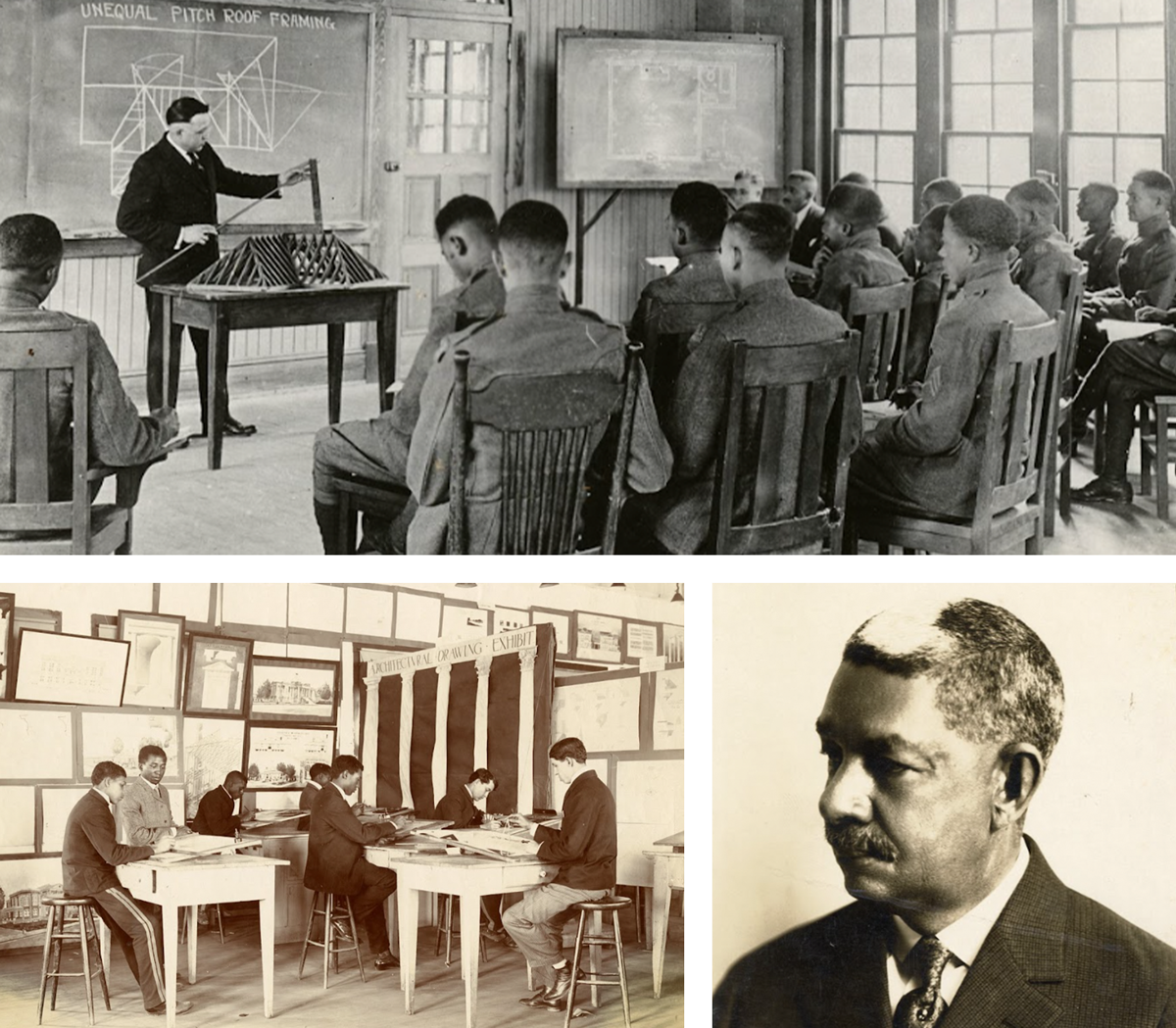
The Robert R. Taylor Map Collection at Tuskegee University Archives features architectural drawings and blueprints created by Robert R. Taylor—the first accredited African American architect—and his contemporaries. This unique collection highlights the development of Tuskegee Institute’s historic campus and showcases the legacy of Black architectural innovation in the late 19th and early 20th centuries.
General Daniel “Chappie” James Jr., born February 11, 1920, in Pensacola, Florida, was the first African American four-star general in the U.S. Air Force. A Tuskegee Airman and distinguished alum who broke racial barriers through courage, excellence, and leadership, receiving over two dozen meritorious service awards throughout his celebrated military career.
The way to lift the race is to teach the masses to work with their hands.Booker T. Washington
Objects depicting racist and/or stereotypical imagery or language may be offensive and disturbing, but the NMAAHC aims to include them in the Collection to present and preserve the historical context in which they were created and used. Objects of this type provide an important historical record from which to study and evaluate racism.
This website contains links to or from third-party sites that are not under the control of the Smithsonian. Click here for the Smithsonian Terms of Use regarding Third Party Websites. The appearance of external links on the Smithsonian’s websites or social media accounts does not constitute an official endorsement on behalf of the Smithsonian.
Objects depicting racist and/or stereotypical imagery or language may be offensive and disturbing, but the NMAAHC aims to include them in the Collection to present and preserve the historical context in which they were created and used. Objects of this type provide an important historical record from which to study and evaluate racism.
This website contains links to or from third-party sites that are not under the control of the Smithsonian. Click here for the Smithsonian Terms of Use regarding Third Party Websites. The appearance of external links on the Smithsonian’s websites or social media accounts does not constitute an official endorsement on behalf of the Smithsonian.
Objects depicting racist and/or stereotypical imagery or language may be offensive and disturbing, but the NMAAHC aims to include them in the Collection to present and preserve the historical context in which they were created and used. Objects of this type provide an important historical record from which to study and evaluate racism.
This website contains links to or from third-party sites that are not under the control of the Smithsonian. Click here for the Smithsonian Terms of Use regarding Third Party Websites. The appearance of external links on the Smithsonian’s websites or social media accounts does not constitute an official endorsement on behalf of the Smithsonian.